|
If diabetes is not treated, or insufficiently treated for many years, many organs of the body may be damaged. The most important damages are reported in the following figure
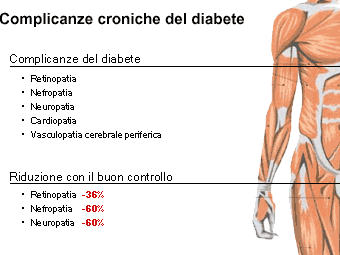
some terms need clarification:
Retinopathy (retinopatia) means a suffering of the retina, that is to say the posterior lining of the eye that permits us to see. A serious damage of this structure may cause blindness. This event has now become unusual because diabetes is better cured and because laser therapy can block the progression of the disease. It must be remarked however that laser therapy decreases visual acuity
Nephropathy (nefropatia) is a renal damage, that may be serious and lead to renal failure requiring dyalisis. This event has now become rare because therapy has improved and because we can make the diagnosis earlier by identifying even very small quantities of albumin in the urine (microalbuminuria). We can also monitor the progression of this disease with the more recent medico-nuclear techniques. However probably the most important progresses have been the more accurate control of blood glucose levels and the introduction of a class of antihypertensive drugs (ACE-I and ARB) that may help to slow down the progression of the disease.
Neuropathy (neuropatia) is a damage of the nervous system.
This damage may strike the nerves of the limbs causing the peripheral neuropathies both sensory and motor, and may damage the autonomic nervous system causing the damaging autonomic neuropathies. This term needs a special clarification: we all know that the heart beats, the gut contracts, that the lung expands rhythmically. These phenomena are governed by the nervous system independently from our will, and because of the we speak of “autonomic nervous system”, and are characterized by rhythm: the heart accelerates and slows its frequency regularly, the breathing does the same. Furthermore these automatic events are synchronized and adaptable to the external environment or the events, like the increase in heartbeats and the breathing rhythm when we make an effort and the decrease during rest.
The loss of this subtle regulatory capacity may cause serious damage like disturbances of the cardiac rhythm (cardiac neuropathy), or intestinal irregularity with uncontrollable diarrea, mostly during the night, and fecal incontinence (gastro-intestinal neuropathy). Likewise this complication may cause urinary incontinence or erectile disturbances (genito-urinary neuropathy), heatstroke due to an impairment of sweating in a hot environment, as on a beach in a summer day. A clinical characteristic of this complication is the irregularity of sweating that is excessive in the upper trunk and substantially absent from the lower body.
At present we have no therapy for this complication, but there are some symptomatic drugs of great help against the painful forms. A new drug, called Fidalrestat, still in the experimental phase, seems to be promising
The sensitive form of neuropathy of the inferior limbs deserves a separate discussion because may cause insensitivity to pain. In this case people affected cannot feel the pain caused by any irregularity or object inside the shoes and thus be severely harmed causing the serious ulcers that characterize the so called “diabetic foot”. Sometimes these ulcers can even go through the whole thickness of the foot
We have no special therapy for this neuropathy, apart from the prevention of the foot ulcers with the rules reported hereafter
Cardiopathy (Cardiopatia): the diabetic persons have a frequent and serious form of ischemic heart disease, i.e. oll the serious forms of heart disease that span from the most subtle forms of cardiac dysfunction to acute myocardial infarction and death. At present both the medical and the surgical therapy are very effective against most forms of ischemic cardipathy, but of course most efforts are being made towards the prevention of the disease and the attending risk of sudden death.
Vascular disease (vasculopatia) means damage of the arterial blood vessels, with the probabile contribution of an underlying inflammatory state, that reduces the flow of blood to many organs of the body.
when the damage affects the cerebral blood vessels a stroke may ensue. If the damage affects the arteries of the lower limbs the most feared diabetic gangrene may ensue and cause the loss of the whole or part of a limb.
When the damage affects the vessels of the pudendal area the consequence may be the appearance of serious sexual disturbances.
|